Field Notes
Why can't I start tasks, even when I want to?
The problem is usually not that you do not care. It is that the task is too vague, too big, emotionally loaded, or sitting next to easier exits.
Direct answer
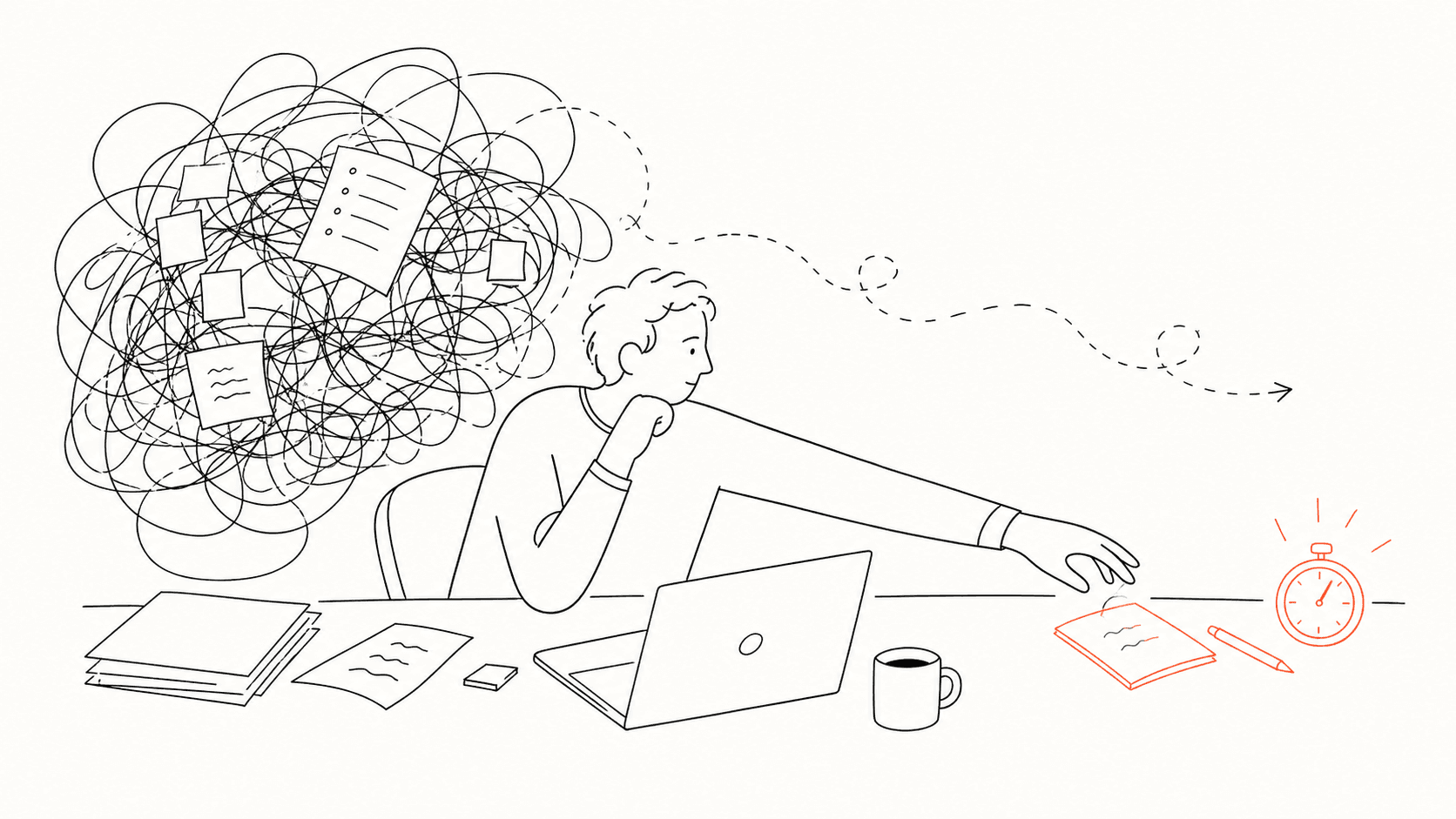
If you cannot start a task even when you care, your brain may not be rejecting the goal. It may be rejecting the current shape of the task.
A vague task creates too many decisions. A huge task creates too much friction. An uncomfortable task creates an easy reason to leave. The first useful move is to make the task easier to enter and the exit harder to take.
What is happening
The task still has too many hidden decisions.
"Work on the project" sounds simple, but it hides a dozen choices: where to start, what counts, how long to go, what to ignore, and what to do when the first part feels bad.
"Open the doc and write the ugly first paragraph" is different. It gives your brain an entrance. It does not ask you to finish the whole thing or become a different person.
Why the phone wins
Your attention follows the easiest doorway.
This can happen with ADHD, procrastination, stress, anxiety, poor sleep, or plain overload. The label matters less than the setup in front of you: one task that feels unclear, plus one escape that is instantly available.
If the phone is face-up, the inbox is open, and the task has no tiny first move, the easier path is obvious. Starting then becomes a fight against the room, the browser, and your own uncertainty.
The practical fix is boring in the best way: make one start visible, move one escape farther away, and run a short block.
Visual model
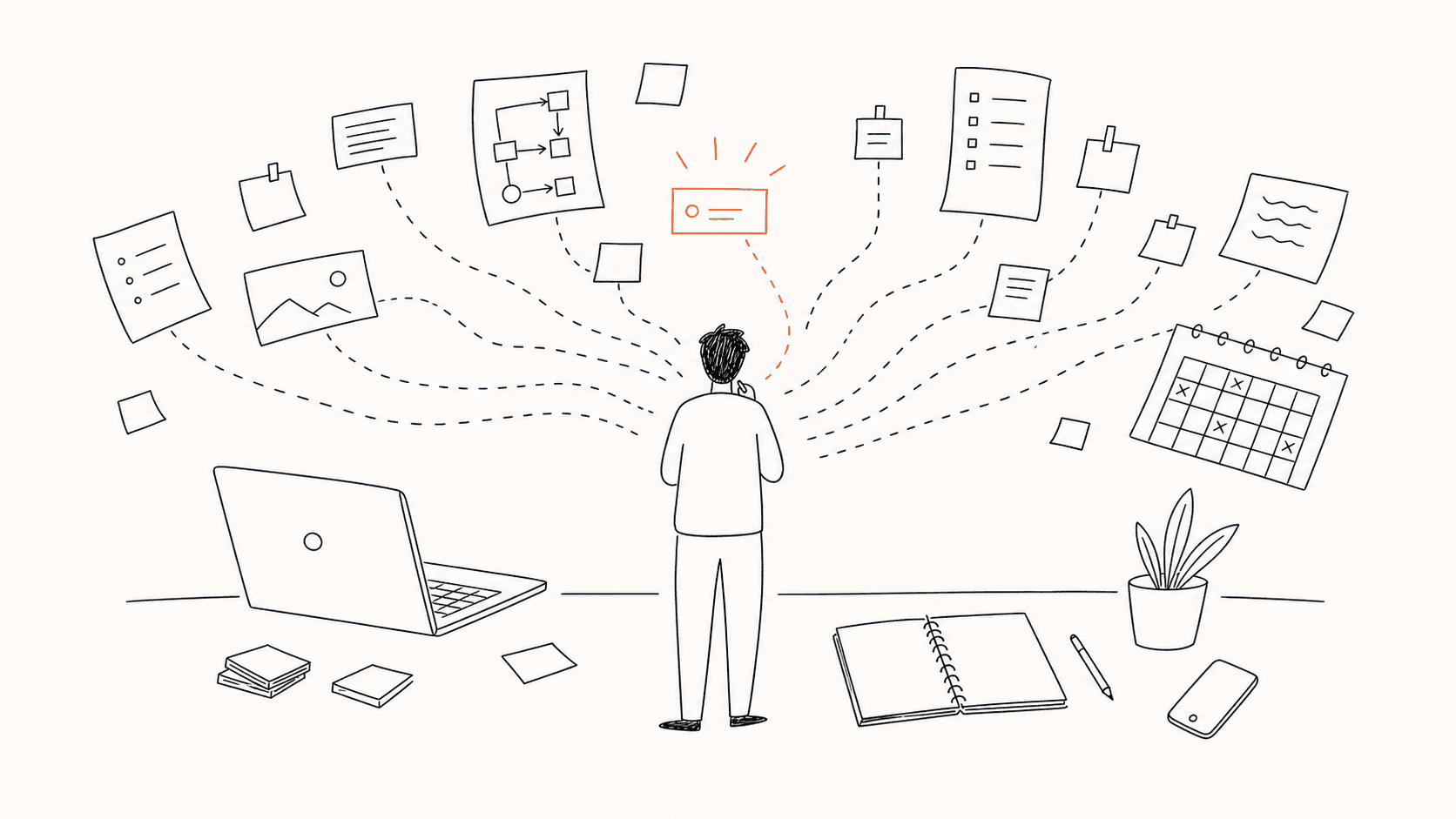
Too many possible starts can feel like no start.
The point is not to map the whole project. It is to choose one small entry point that survives the first ten minutes.
What to try today
Make the first step smaller than your resistance.
- 1Pick one task you are avoiding.
- 2Write the smallest visible start: open the file, title the page, write one bad line, or clear one surface.
- 3Move the main escape route away for 10 minutes.
- 4Start a timer and stop when it ends.
- 5Before leaving, write the next tiny step.
Research notes
The science supports changing the setup, not shaming yourself.
This is not a diagnosis or treatment. If ADHD symptoms are interfering with your life, talk with a qualified healthcare professional. The research below is used carefully: it explains why task shape, planning specificity, switching, and phone placement matter.
Procrastination is connected to the task's shape.
Piers Steel's meta-analysis links procrastination with task aversiveness, delay, self-efficacy, impulsiveness, distractibility, and organization. Plain English: the way the task is set up can make starting harder or easier.
A specific when-and-where plan can help.
Gollwitzer and Sheeran's meta-analysis on implementation intentions found benefits from specifying when, where, and how to act. That supports making the first move concrete instead of keeping the task abstract.
Switching can leave attention residue.
Sophie Leroy's work suggests unfinished tasks can keep part of your attention stuck on the previous thing. This helps explain why tab-hopping makes work feel foggy.
A phone can pull capacity even before use.
Ward and colleagues found that smartphone presence reduced available cognitive capacity in their experiments. The takeaway is practical, not moral: placement matters when starting is already hard.
FAQ
Is not starting a task always ADHD?
No. ADHD can involve trouble starting, organizing, and finishing tasks, but stress, sleep, anxiety, unclear instructions, and overload can create similar stuck moments. This page cannot diagnose you.
What is task paralysis?
Task paralysis is the experience of wanting or needing to do something but feeling unable to begin. It often shows up when the task is vague, large, emotionally loaded, or full of hidden decisions.
Why do I scroll instead of starting?
Scrolling is usually easier to enter than the task. If the task feels unclear or uncomfortable and the phone is close, your attention follows the lower-friction path.
What should I do first?
Shrink the start. Open the file, name the document, write one bad line, set a 10-minute timer, or move the phone away before the block begins.
How does the diagnostic help?
It checks whether you are mainly stuck at choosing, starting, staying with it, or checking what happened, then gives one next step instead of a generic list of advice.
Next
Find the part of the loop where you get stuck.
If starting is only one piece of the pattern, the diagnostic checks the full loop: choosing, starting, staying with it, and checking what happened.
Find my stuck point